Food Choices
The Architecture of a Weekly Food Rhythm
Eleanor Whitfield
·
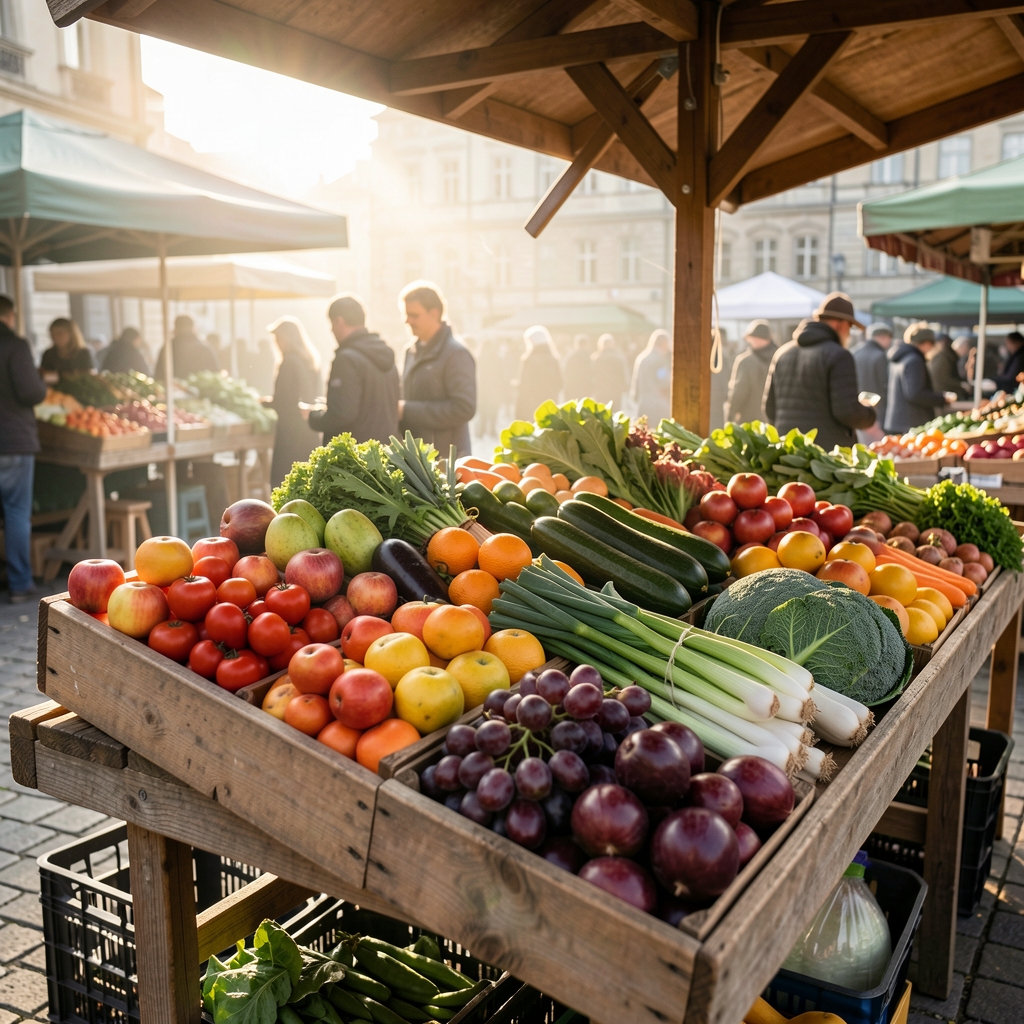
Autumn arrives in the market stalls of London before it arrives in the weather. Somewhere in the last days of August, the stone fruit recedes and the squashes begin to appear — first singly, then in variety, then in abundance. This shift is not merely aesthetic. It marks a change in what is available, affordable, and at its nutritional best. And for those who organise their eating around what is genuinely in season, it marks a corresponding shift in the plate: heavier, warmer, richer in certain fibres and slower-burning carbohydrates. What that shift does to the relationship between daily food choices and body weight is the subject of these notes.
The case for eating seasonally is made most often in terms of flavour and cost. These are real and sufficient arguments for most purposes. But there is a nutritional dimension to seasonality that receives less editorial attention: produce eaten close to its harvest point tends to retain a higher proportion of its micronutrient content than produce that has been stored, transported over long distances, or forced out of season in controlled-atmosphere conditions. For vegetables and fruit in particular, the difference in vitamin C and folate content between a freshly harvested specimen and one that has spent two weeks in refrigerated transit can be substantial.
For weight awareness, this matters in a specific way. The micronutrient density of a food affects how satisfying it is relative to its energy content — not in a precise or linear way, but as a general tendency. Foods that are nutritionally dense tend to be more satiating per unit of energy than nutritionally sparse equivalents. A bowl of autumn root vegetables prepared simply — roasted with olive oil, perhaps with some whole grains — is more satiating than an equivalent bowl of nutritionally depleted, out-of-season produce. The difference is not dramatic in any single meal, but across a week, a month, and a season, it is measurable.
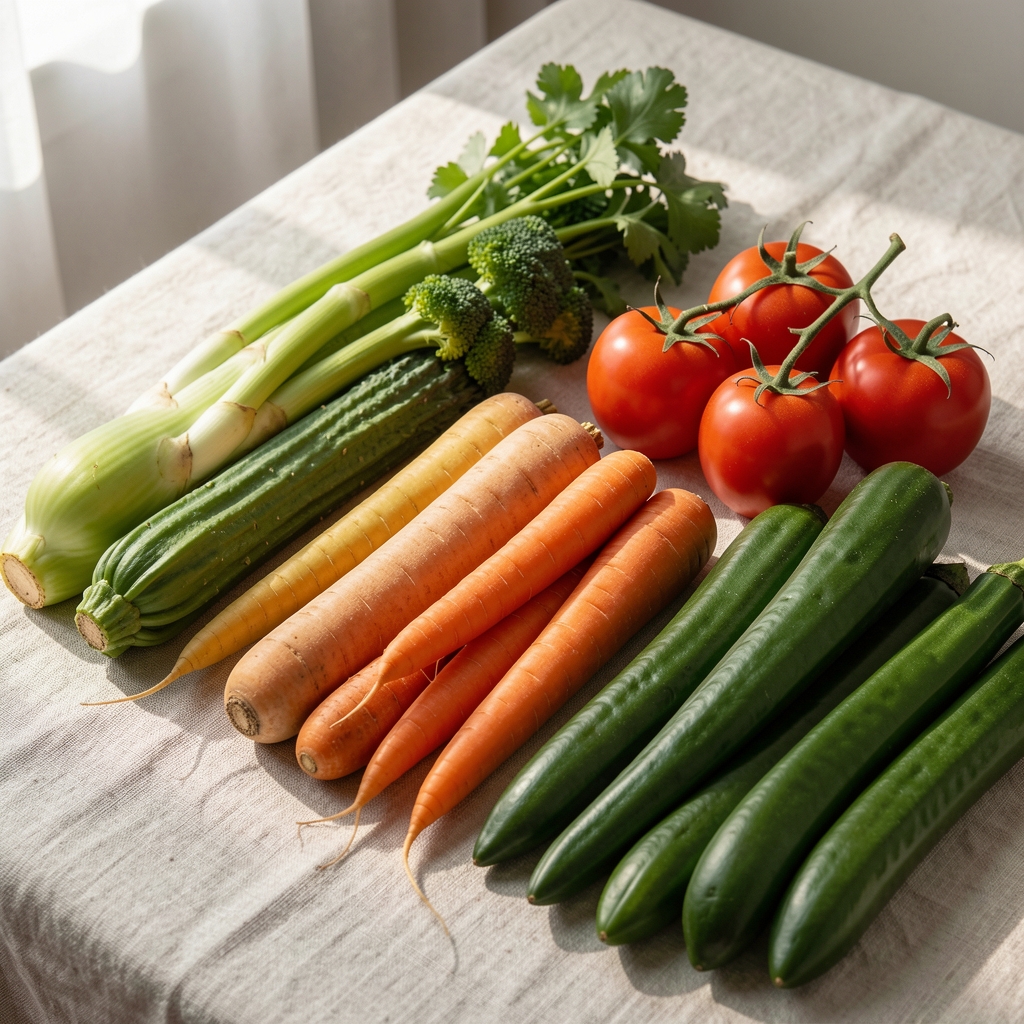
Autumn's particular gift in this respect is the variety of root vegetables, brassicas, and squashes that arrive together. Celeriac, parsnip, swede, cavolo nero, purple sprouting broccoli, butternut and Crown Prince squash — this is a period of unusual density at the market stall, in both nutritional and aesthetic terms. The person who builds their eating around what is genuinely available at this moment in the calendar is not making a sacrifice. They are gaining access to some of the most nutritionally rich produce the year has to offer.
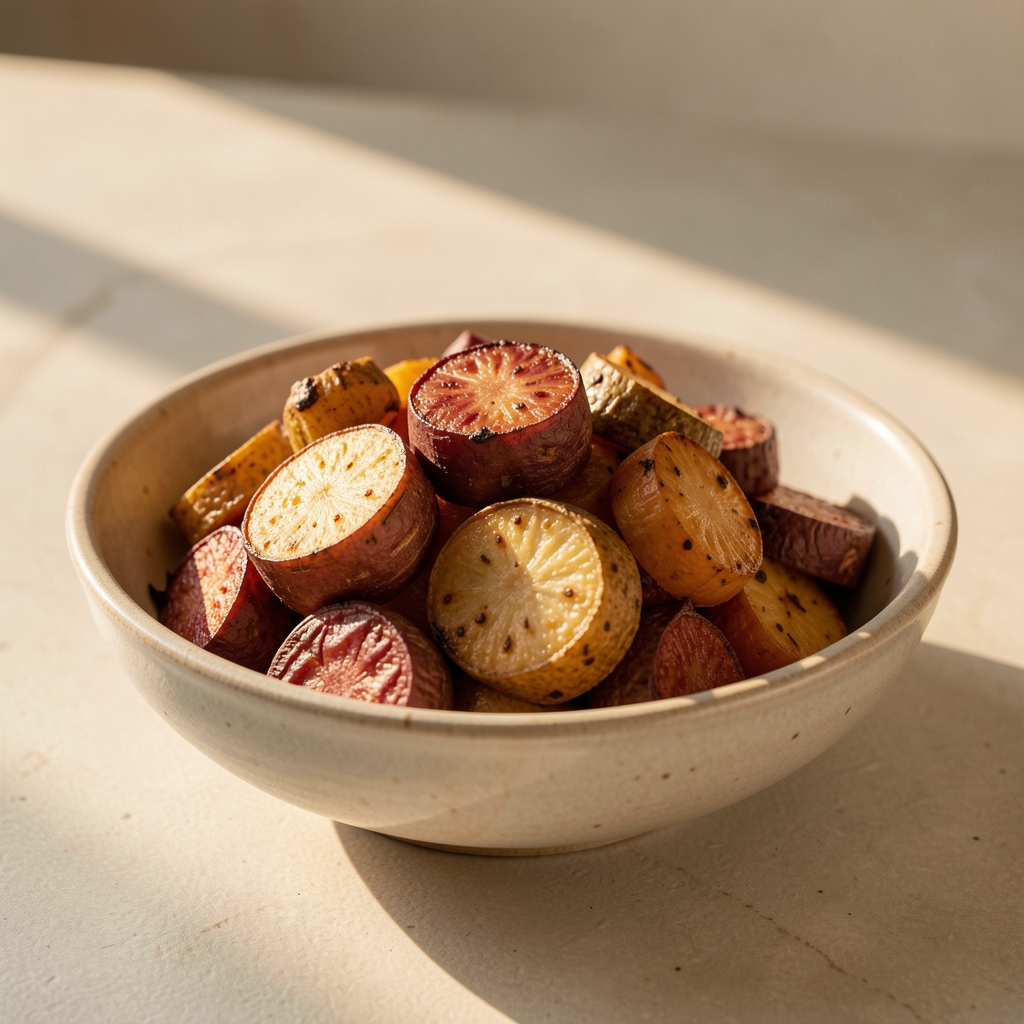
— Field record: roasted root vegetables, London kitchen, autumn 2025
It is a common observation among people who pay attention to their weight across the year that the autumn months bring a slight and often unwelcome upward movement. This is sometimes attributed to the increased comfort-eating that accompanies shorter days and colder weather, and there is something in that account. But there is also a structural explanation that has less to do with psychological comfort and more to do with the energy composition of autumn's characteristic foods.
Autumn cooking tends to be slower and richer. Soups deepen with cream or coconut milk. Stews include more animal proteins and fats. Root vegetables, high in complex carbohydrates, replace the lower-calorie summer salad bases. Bread consumption often increases as cold-weather appetites seek density. None of these shifts is problematic in itself — indeed, many represent a nutritionally sound response to the body's genuine need for more energy in colder months. The issue is when the shift in food composition is larger than the shift in activity level warrants, and when the additional energy is not needed but is consumed anyway because the foods themselves are more energy-dense.
The nutritionist's perspective on this is characteristically pragmatic: the objective is not to prevent the seasonal shift in eating, which is natural and partly desirable, but to maintain awareness of the shift as it happens. A person who notices in early October that their evening meals have become considerably richer than they were in August — and who makes a corresponding adjustment, perhaps adding a more generous vegetable component or returning to whole grains as a base rather than bread — is exercising the kind of active awareness that prevents the seasonal drift from becoming a pattern that persists past the winter months.
"Autumn's produce is not a difficulty to be navigated. It is a resource to be read carefully and used with intention."
— Taldo Journal, Seasonal Produce, February 2026
One of the more interesting intersections between seasonal eating and weight awareness is the way that autumn provides the raw material for highly satisfying plant-based meals at no extra cost or effort. The autumn brassicas — cavolo nero, kale, chard, Brussels sprouts — are among the most nutritionally dense vegetables available in the UK calendar. They are high in fibre, which supports a sense of fullness between meals. They are rich in vitamins K and C. They are inexpensive at their seasonal peak. And they combine readily with the legumes — lentils, chickpeas, cannellini beans — that form the backbone of the most nourishing plant-based autumn cooking.
The practical argument for building more plant-based meals into the autumn week is not ideological. It is structural. A diet that includes two or three substantive plant-based meals per week — meals where legumes, vegetables, and whole grains are the primary components rather than accompaniments — tends to have a higher fibre content, a more varied micronutrient profile, and a lower average energy density per serving than one built predominantly around animal proteins. Over the course of an autumn, this structural difference has measurable implications for gradual weight change.
The error to avoid is regarding plant-based meals as a category of deprivation. Autumn's legume and brassica combinations — a deeply flavoured black bean and cavolo nero stew, a roasted squash and chickpea tray, a warm lentil and celeriac soup — are not lesser meals. They are, in terms of flavour complexity and satiety, among the most substantial things one can put on a plate in October. The seasonal abundance of this moment deserves to be used fully, and the weight-aware eater who does so is not restricting anything. They are simply reading the season well.
Autumn's fruit — apples, pears, quinces, late plums, damsons — is nutritionally substantive and seasonally brief. The British apple season runs, depending on variety, from late August through November, and within that period there is an extraordinary diversity available to the attentive buyer. Cox's Orange Pippin, Russet, Bramley, Worcester, Discovery, Spartan — each has a different flavour character, a different texture, and a slightly different sugar-acid balance that makes it more or less appropriate for different purposes.
For weight awareness, fruit intake in autumn has a particular significance as a counterpoint to the increased energy density of autumn's savoury cooking. A daily portion of fruit — a couple of seasonal apples, a pear, a handful of late plums — contributes fibre, vitamins, and natural sugars that provide energy without adding the saturated fat that autumn's richer savoury preparations may already be supplying in quantity. There is also the question of the sweet appetite: autumn brings with it an increased desire for sweet flavours, a desire that, if met with seasonal fruit, tends to be more rapidly and stably satisfied than if met with processed sweet foods.
The food journalist and kitchen writer Nigel Slater has written at length about the peculiar consolation of autumn fruit — of the smell of a Cox's apple cut open in a cold kitchen, of the pleasure of a quince roasted slowly with honey. This is not a nutritional argument, but it is a relevant one. The seasonal specificity of autumn fruit is part of what makes it genuinely satisfying in a way that out-of-season equivalents are not. The person who eats a British Russet in October because it is genuinely remarkable at that moment is getting something from that piece of fruit — flavour-wise, texture-wise, in terms of nutritional freshness — that they are unlikely to replicate in March from a stored or imported substitute.
For those who find value in food journalling as a nutritional practice, the autumn months offer an unusually rich observational period. The transition from summer to autumn eating is rapid enough to be noticeable in a short record, but gradual enough to study with care. A person who keeps even a light weekly record of what they are eating — and notices when the summer vegetables disappear from their shopping and the root vegetables and squashes arrive — is building an awareness of seasonal eating patterns that is substantially more useful than any nutritional abstraction.
What does a useful seasonal food journal record? Not, in the first instance, quantities or macronutrient ratios. Rather: which vegetables featured this week and whether they were seasonal or out-of-season imports. Whether fruit appeared daily or intermittently. Whether a plant-based meal was prepared at all. Whether cooking happened from whole ingredients or relied heavily on prepared foods. These are structural observations, and over a month they build a picture of how closely a person's actual eating tracks the seasonal availability around them.
The value of this kind of record for weight awareness is indirect but real. Seasonal eating, when pursued with even moderate commitment, tends to increase the variety of vegetables and fruit in the diet, increase fibre intake, reduce reliance on processed or prepared foods, and anchor the shopping and cooking habits in what is genuinely excellent rather than what is merely convenient. These structural improvements do not require calorie counting or formal weight management programmes. They require only that the plate be organised around what autumn is offering at its best.

Eleanor Whitfield is the founding editor of Taldo Journal and writes on the intersection of daily food choices, eating patterns, and weight awareness from a nutritionist's perspective. She has contributed to independent publications on food and wellness practice for over eight years.
More from this author